
🩺 Nursing Question of the Day
Challenge yourself with one exam-style nursing question every day.
✅ Think carefully • ✅ Choose your answer • ✅ Then scroll down to check the explanation.
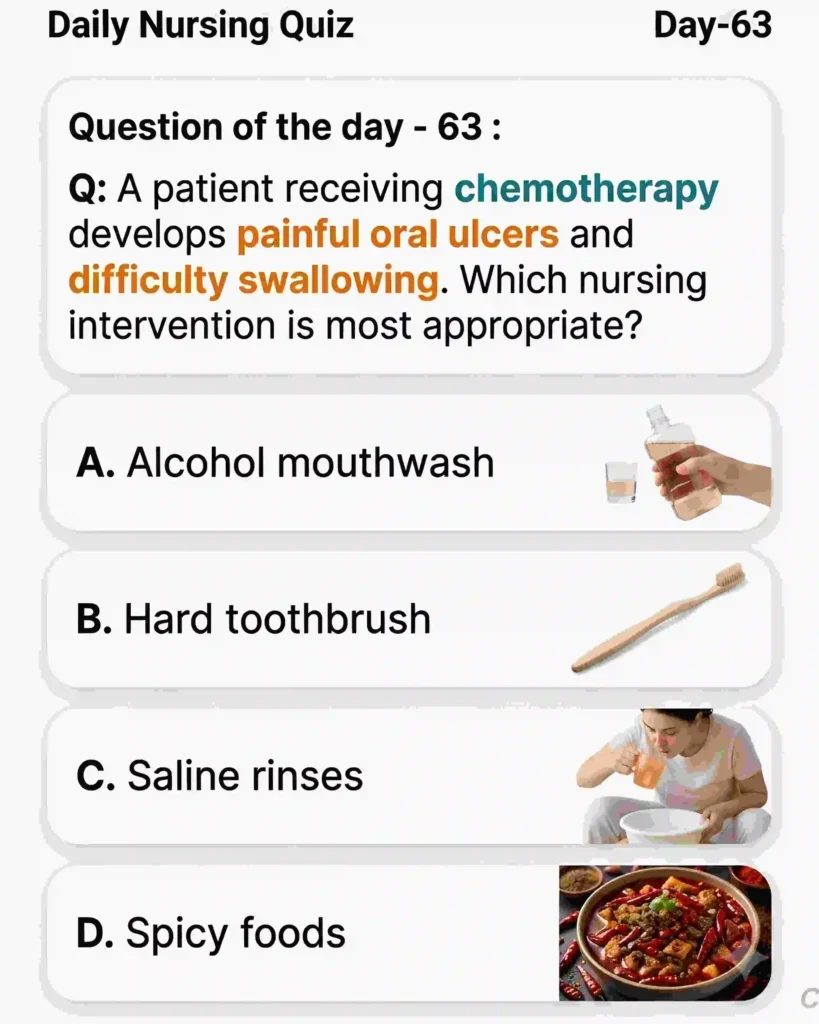
📝 Today’s Question:
A patient receiving chemotherapy develops painful oral ulcers and difficulty swallowing. Which nursing intervention is most appropriate?
👆 Comment your answer and the tap an option to check your answer.
Don’t forget to Comment your answer below.
🦷 Oral Care During Chemotherapy
A patient receiving chemotherapy develops painful oral ulcers and difficulty swallowing. Which nursing intervention is most appropriate?
A. Alcohol mouthwash
B. Hard toothbrush
C. Saline rinses
D. Spicy foods
🩺 What is happening here?
Chemotherapy can damage rapidly dividing cells. The cells lining the mouth and throat also divide quickly, so they can become injured during treatment.
This may lead to oral mucositis, where the oral mucosa becomes inflamed, sore, and ulcerated. The patient may complain of mouth pain, difficulty eating, difficulty swallowing, dryness, or sensitivity to certain foods.
Chemotherapy → injury to rapidly dividing oral mucosal cells → inflammation and breakdown of mucosa → painful ulcers → difficulty chewing and swallowing
💧 Why are saline rinses appropriate?
Gentle saline mouth rinses can help keep the mouth clean and moist while avoiding unnecessary irritation of already damaged tissues.
The key word in this question is painful oral ulcers. The nurse should choose an intervention that is gentle rather than something that can further irritate or traumatize the mouth.
Depending on the patient’s condition and facility protocol, other supportive measures may include frequent gentle oral care, adequate hydration, soft foods, and prescribed pain relief.
When the mouth is already sore and ulcerated, think “gentle care.” Avoid things that burn, scratch, or further damage the mucosa.
❌ Why are the other options wrong?
Alcohol-containing mouthwashes can be irritating and may worsen dryness and discomfort. They are therefore not a good choice for a patient with painful chemotherapy-related oral mucositis.
A hard toothbrush can mechanically injure fragile oral tissues and make the ulcers more painful. A soft-bristled toothbrush or other gentle oral-care method is generally preferred, depending on the patient’s condition and platelet count.
Correct. Gentle saline rinses help maintain oral cleanliness without the unnecessary irritation associated with alcohol-based products or abrasive oral care.
Spicy foods can sting and irritate open oral ulcers, making the patient’s pain worse. Bland, soft, and easy-to-swallow foods are generally more comfortable.
📚 Nursing Care for Oral Mucositis
| Helpful approach | Why? |
|---|---|
| Gentle saline rinses | Helps keep the mouth clean without unnecessary irritation |
| Soft toothbrush | Reduces trauma to sensitive oral tissue |
| Avoid spicy foods | Reduces burning and irritation |
| Maintain hydration | Helps reduce oral dryness and supports comfort |
⚠️ One More Important Point
Chemotherapy patients may also develop neutropenia and thrombocytopenia. Therefore, oral care should be individualized.
If platelet counts are very low, the nurse should follow the facility’s precautions to avoid causing bleeding. If severe oral pain, inability to drink, fever, or signs of infection are present, the healthcare team should be informed promptly.
“Chemo mouth = Gentle mouth.”
Think: saline + soft care + bland foods. Avoid alcohol + hard brushing + spicy foods.
When a chemotherapy patient has oral ulcers or mucositis, choose the option that is gentle and non-irritating.
Saline rinse → appropriate.
Alcohol, harsh brushing, spicy foods → can irritate the mucosa.
Concept clarity • Easy recall • Nursing success
Don’t forget to comment the answer below.