
🩺 Nursing Question of the Day
Challenge yourself with one exam-style nursing question every day.
✅ Think carefully • ✅ Choose your answer • ✅ Then scroll down to check the explanation.
📝 Today’s Question:
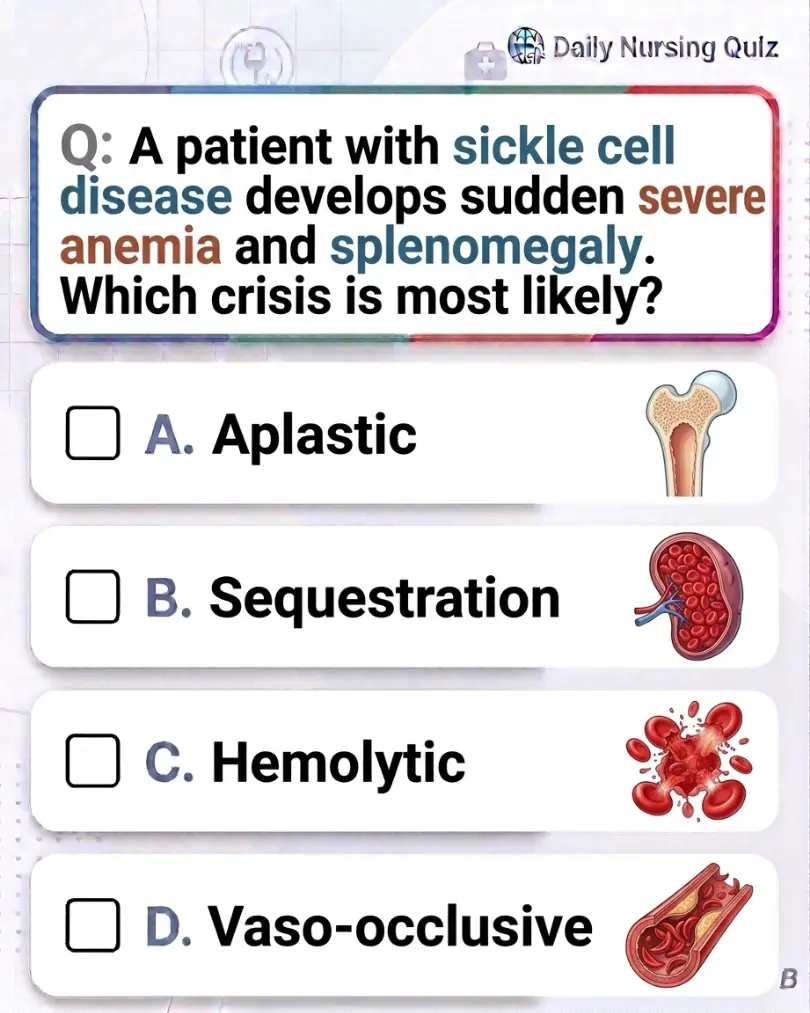
A patient with sickle cell disease develops sudden severe anemia and splenomegaly. Which crisis is most likely?
👆 Comment your answer and the tap an option to check your answer.
Don’t forget to Comment your answer below.
🩸 Sickle Cell Disease — Sequestration Crisis
B. Sequestration
C. Hemolytic
D. Vaso-occlusive
✅ Answer: (B) Sequestration
📖 What is a Sequestration Crisis?
Sequestration = Trapping or pooling of blood within an organ, preventing it from returning normally to the circulation.
In a splenic sequestration crisis, large amounts of blood become suddenly trapped in the spleen. This causes the spleen to enlarge and circulating blood volume to fall rapidly.
⬇️
🫀 ↓ Circulating blood volume
⬇️
🩸 Severe anemia + Splenomegaly
👉 Therefore, the combination of sudden severe anemia + splenomegaly strongly points to a sequestration crisis.
🩺 Why is Option B Correct?
A sequestration crisis is characterized by rapid pooling of blood in the spleen. The patient may develop:
- ✔ Sudden worsening anemia
- ✔ Rapid enlargement of the spleen
- ✔ Pallor and weakness
- ✔ Tachycardia
- ✔ Hypovolemia or circulatory compromise in severe cases
👉 The key exam clue is “acute anemia + enlarged spleen.”
❌ Why Are the Other Options Wrong?
A. Aplastic Crisis
❌ Usually results from temporary suppression of red blood cell production, classically associated with parvovirus B19. It causes a marked fall in hemoglobin and reticulocytes but does not typically cause acute splenomegaly.
B. Sequestration Crisis
✅ Correct. Sudden pooling of blood in the spleen produces acute severe anemia with splenomegaly.
C. Hemolytic Crisis
❌ Involves increased destruction of red blood cells, producing worsening anemia and jaundice. Splenic enlargement is not the defining clue in this acute presentation.
D. Vaso-occlusive Crisis
❌ Caused by microvascular obstruction from sickled RBCs and is classically associated with severe pain, not sudden severe anemia with splenomegaly.
📝 Quick Comparison of Sickle Cell Crises
| Crisis | Key Clue |
|---|---|
| Sequestration | Acute anemia + splenomegaly |
| Aplastic | ↓ RBC production + ↓ reticulocytes |
| Hemolytic | Increased RBC destruction |
| Vaso-occlusive | Severe pain from vascular obstruction |
“Sequestration = Spleen Stores Blood.”
🩸 Sudden anemia + Big spleen = Sequestration crisis ✅
📌 Exam Tip: In sickle cell disease, remember splenomegaly + sudden severe anemia as the classic clue for splenic sequestration crisis. In contrast, aplastic crisis is associated with reduced erythropoiesis and a low reticulocyte count.
Concept clarity • Easy recall • Nursing success
Don’t forget to comment the answer below.