
🩺 Nursing Question of the Day
Challenge yourself with one exam-style nursing question every day.
✅ Think carefully • ✅ Choose your answer • ✅ Then scroll down to check the explanation.
📝 Today’s Question:
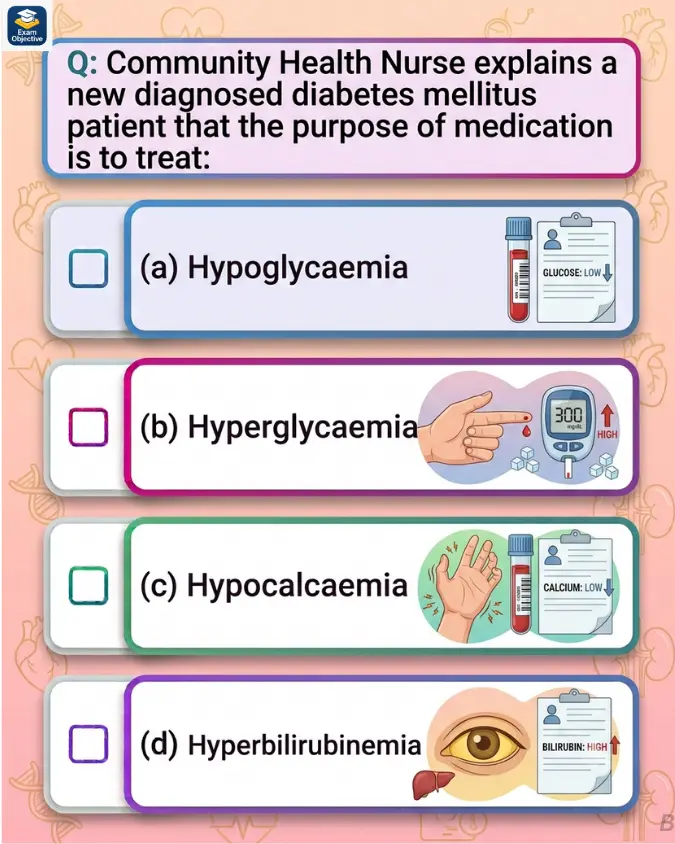
Community Health Nurse explains a new diagnosed diabetes mellitus patient that the purpose of medication is to treat:
👆 Comment your answer and the tap an option to check your answer.
Don’t forget to Comment your answer below.
🩸 Diabetes Mellitus & Hyperglycaemia
B. Hyperglycaemia
C. Hypocalcaemia
D. Hyperbilirubinemia
✅ Answer: (B) Hyperglycaemia
📖 What Happens in Diabetes Mellitus?
Diabetes mellitus is a metabolic disorder characterized by persistently elevated blood glucose levels, resulting from inadequate insulin secretion, impaired insulin action, or both.
⬇️
🍬 Glucose remains in bloodstream
⬇️
📈 Blood glucose increases
⬇️
Hyperglycaemia
💊 Why is Option B Correct?
The primary goal of diabetes medications is to help maintain blood glucose within an appropriate target range and thereby treat or prevent the complications associated with hyperglycaemia.
Depending on the type of diabetes and the patient’s clinical situation, treatment may include insulin and/or oral or injectable glucose-lowering medications, along with lifestyle measures.
👉 Therefore, the correct answer is hyperglycaemia.
⚠️ Why Must Hyperglycaemia Be Controlled?
Persistent high blood glucose can damage blood vessels and nerves over time and increase the risk of complications involving the:
- 👁️ Eyes — diabetic retinopathy
- 🫘 Kidneys — diabetic kidney disease
- 🦶 Peripheral nerves — neuropathy
- ❤️ Heart and blood vessels — cardiovascular disease
Good glycemic control helps reduce the risk of these long-term complications.
❌ Why Are the Other Options Wrong?
A. Hypoglycaemia
❌ Hypoglycaemia means abnormally low blood glucose. It is a potential adverse effect of some diabetes treatments, not the primary condition the medication is intended to treat.
B. Hyperglycaemia
✅ Correct. Diabetes medications are used to lower elevated blood glucose and improve glycemic control.
C. Hypocalcaemia
❌ Hypocalcaemia means low serum calcium and is not the primary metabolic abnormality treated by diabetes medication.
D. Hyperbilirubinemia
❌ Hyperbilirubinemia means elevated bilirubin and is associated with conditions involving bilirubin metabolism or liver/biliary function, not the primary abnormality in diabetes mellitus.
📝 Quick Recall
| Term | Meaning |
|---|---|
| Hyperglycaemia | High blood glucose |
| Hypoglycaemia | Low blood glucose |
| Hypocalcaemia | Low serum calcium |
| Hyperbilirubinemia | High serum bilirubin |
Diabetes = Blood sugar HIGH → Medication brings glucose DOWN.
🍬 ↑ Glucose = Hyperglycaemia → 💊 Treatment aims to control it.
📌 Exam Tip: When asked what diabetes medication primarily treats, identify the underlying problem: elevated blood glucose (hyperglycaemia).
Concept clarity • Easy recall • Nursing success
Don’t forget to comment the answer below.